
Resource Management Overview
Resource Management helps you get the right equipment and people to the right place at the right time. Instead of coordinating through emails, texts, and phone calls, Resource Management gives your team a single, structured workspace to request, schedule, and track assets and labor across all your jobs.
💥Resource Management is a premium product and requires a separate license. Please contact your Account Manager for more information on premium product licenses or reach out to Customer Support at help@tenna.com or call 888.836.6269.
In this article:
How it Works
With Resource Management, your team can manage the full lifecycle of resource planning without jumping between systems:
- Submit and track requests for equipment and labor across all job sites
- Give dispatch teams the information they need to schedule and deploy resources
- Monitor request status from submission through completion
- Replace ad-hoc messages with consistent, trackable workflows
- See upcoming resource needs across your entire portfolio
Core Components
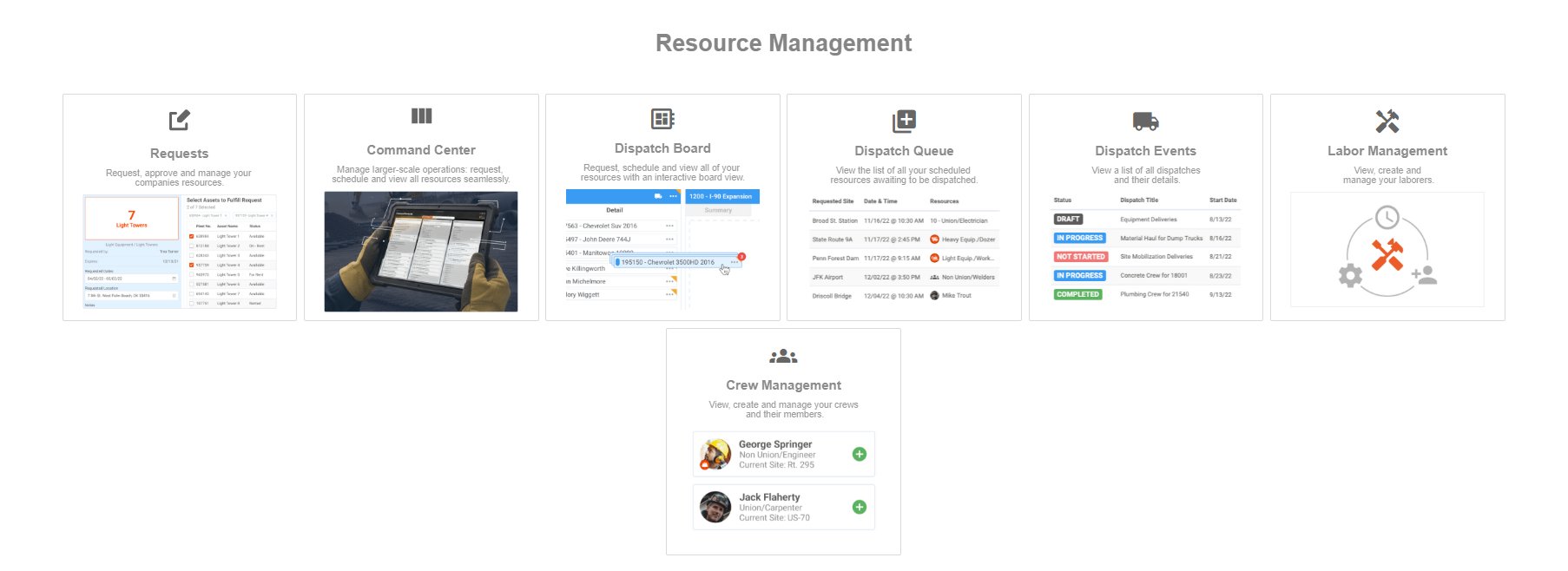
Resource Management is organized into three main areas:
Requests
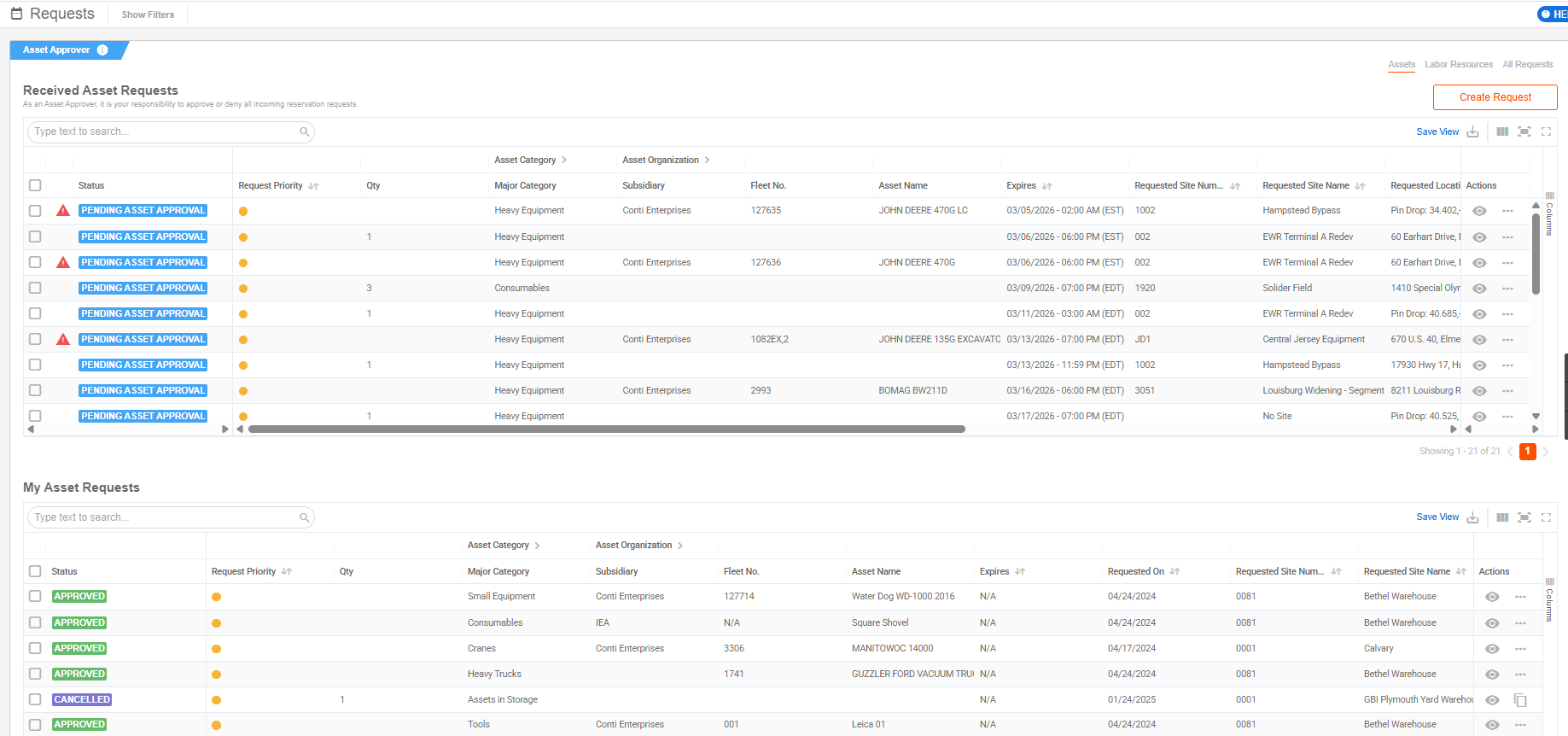
The Requests area is where field and project teams communicate what they need.
From here, you can:
- Create and submit asset requests for equipment and physical assets, or labor resource requests for operators, drivers, and other personnel
- View requests by type using the Assets, Labor Resources, or All Requests tabs
- Track each request's status, dates, location, and priority
For more information see:
Dispatch & Scheduling
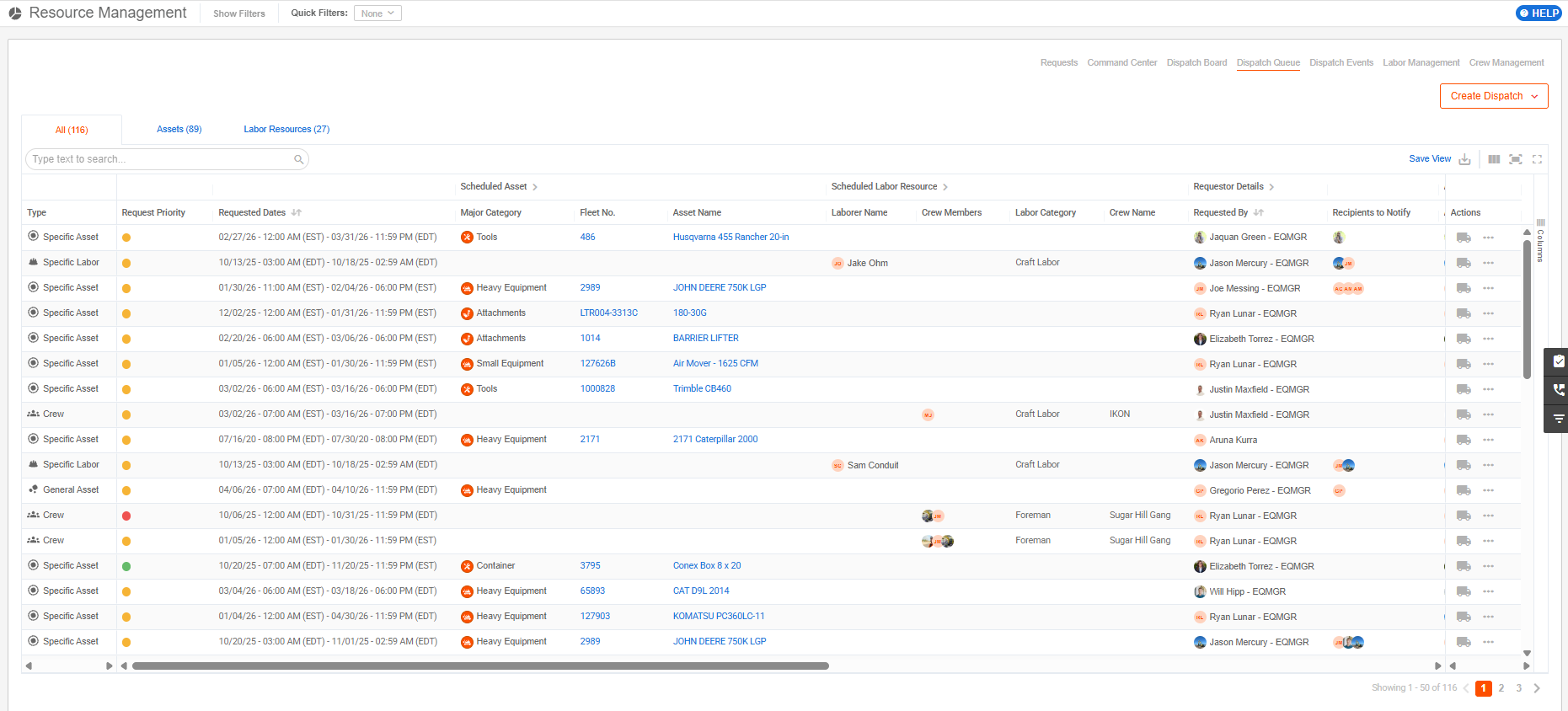
Once requests are submitted, the dispatch or resource management team uses dedicated tools to turn those requests into scheduled deployments.
From here, dispatchers can:
- Review and prioritize incoming requests
- Match requests to available assets and labor
- Build and adjust schedules based on dates, locations, and priorities
- Reassign or reschedule resources as jobs change
Pro Tip! Think of this as the execution engine, it keeps daily and weekly operations running smoothly.
For more information see:
Visibility & Tracking
Resource Management gives everyone a clear picture of how resources are being used:
- Requests: View requests and scheduled resources for a single job
- Schedule: See needs for various jobsites and schedules for assets
- Status Tracking- Understand which requests are open, scheduled, or completed
Why This Matters: This helps Supers spot issues early, avoid conflicts, and make smarter planning decisions.
How Different Roles Use Resource Management
| Role | Primary Use |
| Field/Project Teams | Submit requests, specify needs, and track status |
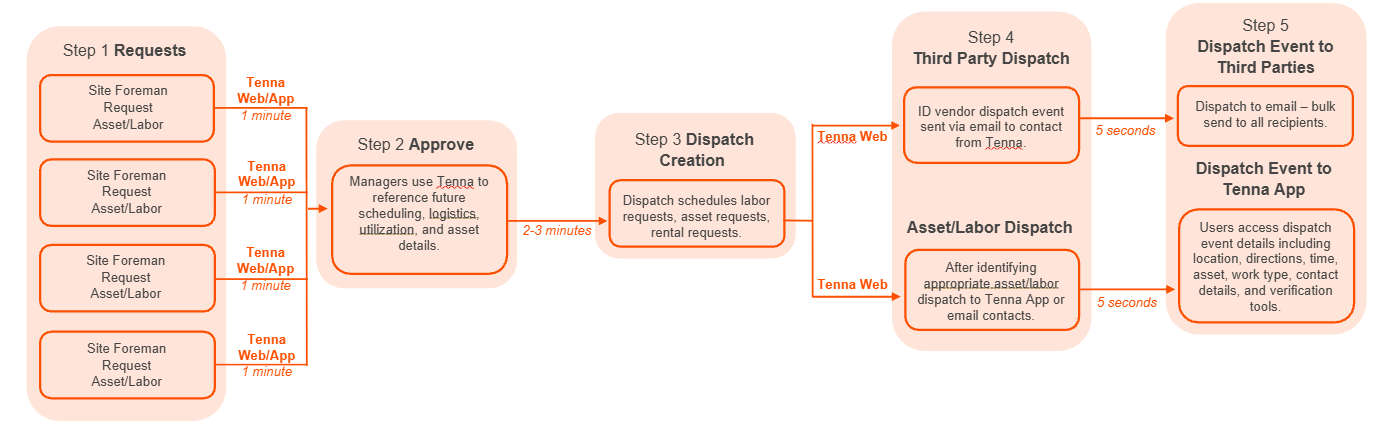
| Dispatchers | Review requests, assign resources, deploy requests, and manage schedules |
| Supers/Foreman | Monitor allocations, identify bottlenecks, and review historical data |
| Equipment Managers | Approve/Deny Equipment Requests |
| Labor Resource Managers | Approve/Deny Labor Resource Requests |
Resource Management Workflow
How Does This Relate to Dispatch Command Center?
Dispatch Command Center works hand-in-hand with Resource Management. While Resource Management is where your team defines and tracks what's needed across your jobs, Dispatch Command Center is where those needs become action, giving dispatchers the tools to plan, assign, and move resources across your sites in one place.
For more information, see Dispatch Command Center Overview.